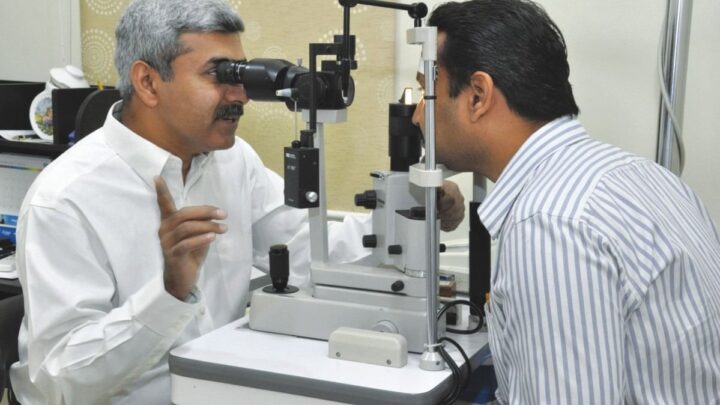
Cataract surgery was once considered a scary invasive surgery of last resort, with large cuts on the eye, done only when visual impairment had become debilitating. Today, it stands as one of the most sophisticated, outpatient refractive procedures in modern medicine. Driven by micro-incisional fluidics, digital visualization, and advanced optics, modern cataract surgery does not merely clear cloudy vision—it gives lifelong visual clarity tailored to each patient’s lifestyle.
In central Maharashtra, Hazari Eye Hospital has pioneered the introduction of cutting-edge technology for safe, precise eye care across both Cataract and Glaucoma. Notably, it is the only center in Chhatrapati Sambhajinagar equipped with the Alcon Unity System with 4D Phaco and the Ngenuity 3D Visualization System, bringing world-class technology to the region.
The Next Frontier in Fluidics: Alcon Unity System with 4D Phaco
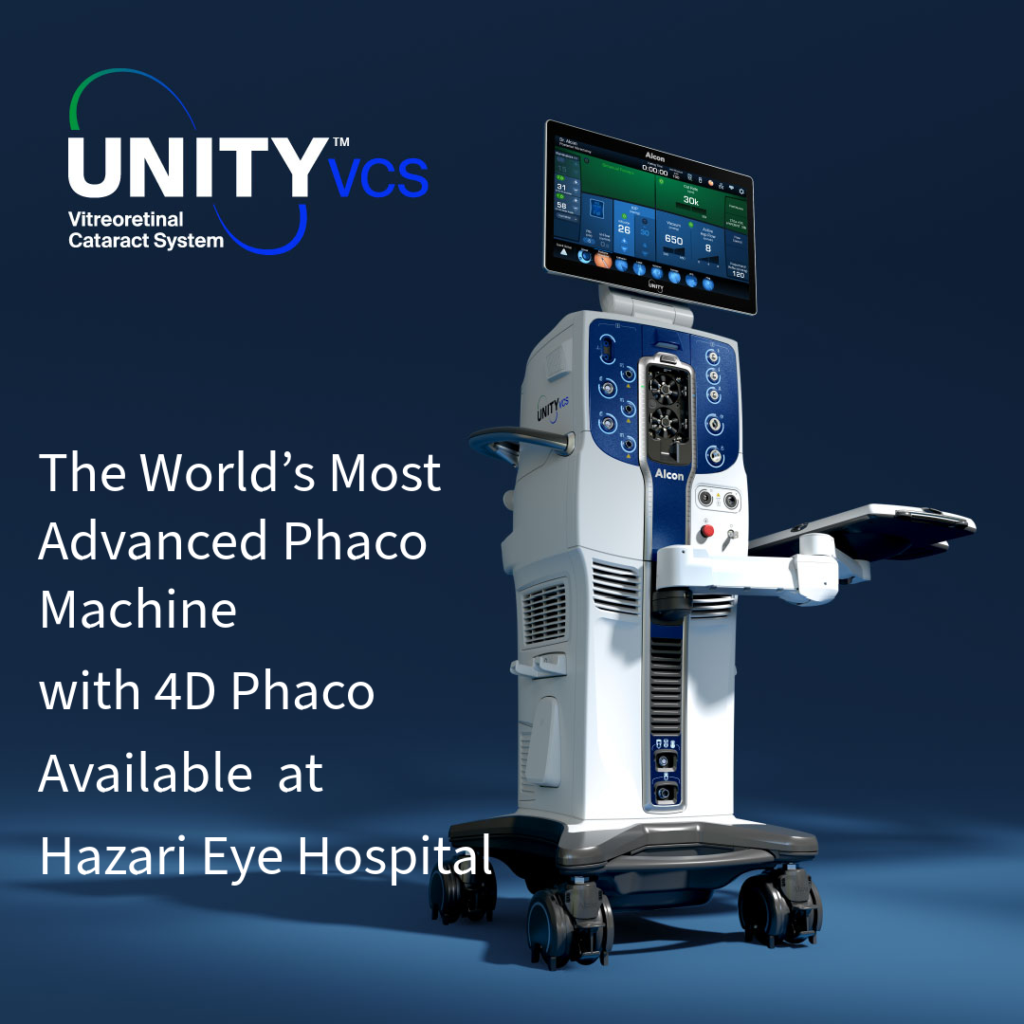
At the core of modern cataract removal is phaco-cataract surgery, where high-frequency ultrasound breaks down the cataract through self-sealing, sub-2.4 mm clear corneal incisions. However, traditional systems often struggle with anterior chamber turbulence and instability during the removal of hard lens fragments. Traditional phaco systems also usually operate at intra ocular pressures that are 3-4 times our normal eye pressures.
The arrival of the Alcon Unity System with 4D Phaco represents a major leap in surgical fluidics. By pairing 4D ultrasound cutting efficiency with intelligent fluidics, the Unity platform enables surgeons to operate at lower, more natural physiological intraocular (eye) pressures. The system continuously senses chamber dynamics and modulates vacuum within milliseconds, preventing instability and turbulence inside the eye during surgery. This ultra-gentle fluidic control shields delicate corneal endothelial cells from mechanical injury and dissipates minimal energy—a crucial advantage not only in mature and hard cataracts but also for glaucoma patients where preserving trabecular meshwork health and avoiding eye pressure spikes is vital.
Heads-Up Digitally Assisted Surgery: Ngenuity 3D Visualization
For decades, cataract surgeons remained tethered to operating microscope eyepieces. The Alcon Ngenuity 3D Visualization System has broken this constraint with digitally assisted surgery.
Operating in an ergonomic “heads-up” posture with polarized 3D glasses, the surgeon looks at an ultra-high-definition stereoscopic 4K display. The system captures magnified anterior segment views with unprecedented depth of field, vivid contrast, and precise spatial perception. Digital color filters and customizable dynamic range settings illuminate fine anatomical landmarks—such as the transparent anterior lens capsule and subtle angle structures—crucial for both complex cataract extraction and micro-invasive glaucoma surgery (MIGS). Furthermore, Ngenuity operates with significantly lower light intensity than conventional microscopes, protecting the patient’s retina against phototoxic stress.
Gold-Standard Infection Control: NABH-Certified Modular Operation Theaters
Advanced surgical platforms deliver optimal outcomes only within an uncompromised sterile environment. Operating suites at Hazari Eye Hospital feature fully Modular Operation Theaters certified to NABH standards.
NABH (National Accreditation Board for Hospitals & Healthcare Providers) compliance enforces rigorous bio-burden controls:
- Laminar Airflow & HEPA Filtration: Vertical unidirectional laminar flow purges airborne microbes, maintaining an ultra-clean Class 100 air curtain over the surgical field.
- Antimicrobial Architecture: Seamless anti-static flooring, coved wall corners, and antibacterial cladding eliminate micro-crevices where pathogens can harbor.
- Positive Air Pressure Differentials: Controlled pressure barriers prevent outside corridor air from infiltrating the sterile surgical zone.
These hospital-grade safeguards minimize surgical site infections and endophthalmitis to near-zero levels.
Tailored Refractive Options: Modern Intraocular Lenses
Once the cataract is removed, the eye is rehabilitated with an artificial intraocular lens (IOL) positioned inside the natural capsular bag:
| Lens Technology | Optical Design | Visual Capability |
| Monofocal | Single focal target | Clear distance vision; reading glasses required for near work |
| Toric | Cylindrical correction | Neutralizes corneal astigmatism for crisp uncorrected distance |
| Extended Depth of Focus (EDOF) | Elongated focal channel | Continuous clarity from distance through computer screens with low glare |
| Trifocal & Multifocal | Diffractive multi-zone rings | Functional visual independence at near, intermediate, and far ranges |
Selecting the ideal lens involves evaluating corneal curvature, ocular anatomy, and occupational needs, ensuring patients with screen-heavy routines or active outdoor lifestyles achieve their desired visual goals.
Seamless Recovery Profile
Modern cataract surgery is completed in 10 to 15 minutes using topical drop anesthesia, entirely avoiding painful injections. Because the valve-like micro-incisions seal naturally without sutures, patients resume normal daily activities within 24 to 48 hours. By pioneering advanced technologies—including the exclusive availability of Alcon Unity 4D Phaco and Ngenuity 3D visualization in Chhatrapati Sambhajinagar alongside NABH-certified operation theater—Hazari Eye Hospital exemplifies how modern cataract surgery achieves the highest standard of safety, comfort, and refractive precision.
Have a question about this?
Book a consultation with our eye specialists in Aurangabad.